
Our Blog

Dear Femme Forte, Look at you! A whole nine-year-old today! A whole 108 months, 3,287 days and approximately 78,888 hours of dreaming, building, learning, resisting, surviving, failing, getting back up, celebrating, giving and occasionally operating on prayer, passion and budgets that required the multiplication powers of Jesus. Every year since you were born, I have written you a letter and each year, I am amazed by how much life you have lived since the last one. You have grown, stretched, stumbled, surprised me and even tested me. My goodness, you have tested me! There have been moments when I have looked at you with immense pride, and others when I have whispered, “Madam, please behave.” Yet through it all, you have remained beautifully and stubbornly alive. You were born from an audacious belief, that women and girls deserve to be seen, heard, supported and reminded of their power. What began as an idea in my heart has become an archive of memory, a sisterhood and a movement that now walks on legs beyond my own.

For many women and girls, the internet is a place of promise and contradiction. It offers avenues for visibility and power, yet still echoes the same inequalities and harms they navigate offline. It is a site of resistance, and of repetition. As we mark the 16 Days of Activism against gender-based violence, the question, "What would a truly feminist internet look like?" becomes increasingly urgent. The Challenge: Digital Inequality and Online Violence Instead of expanding opportunity, the digital sphere has become another site where women are routinely targeted; through harassment, stalking, data exploitation, and the non-consensual sharing of intimate images (UN Women, 2020). This violence isn't merely "virtual". It has profound, lasting consequences on confidence, employment, and wellbeing, highlighting that gender-based violence in digital spaces is a continuation of systemic inequality, not an isolated issue. The Legal Ground: Digital Rights Are Women’s Rights Too Women and girls have the right to participate online without fear. Digital safety and privacy are not privileges; they are legal rights protected under both national and international law. In Uganda, the Data Protection and Privacy Act (2019) affirms every individual’s right to: privacy of personal information, consent before data collection and sharing, access and correction of their personal data, and protection from unauthorized data disclosure. This means that women have the legal right to control how their images, phone numbers, messages, and biometric information are used and shared online. Non-consensual sharing of personal or intimate data violates dignity and constitutes a breach of the law. Globally, frameworks such as the EU General Data Protection Regulation (GDPR) reinforce similar principles of consent, transparency, and data control (EU, 2016). On the African continent, the African Union Convention on Cybersecurity and Personal Data Protection (Malabo Convention, 2014) emphasizes digital rights and state responsibility to prevent cyber violence and exploitation. A feminist internet, therefore, is rooted not only in social justice, but also in law. Systemic Failure and Lack of Representation Legal protections alone are not enough because technology platforms are designed within patriarchal, profit-driven systems. Algorithms, content moderation tools, and platform policies often embed gender biases, prioritizing engagement and speed over user safety. Features that amplify virality can unintentionally promote harassment, while reporting tools frequently fail to address gendered abuse effectively. Women, particularly those from marginalized communities, are also underrepresented in tech leadership and digital policymaking (APC, 2022). This combination of exclusion and systemic bias means platforms rarely center care, equity, or inclusion. Paired with harassment and surveillance, these gaps turn potential digital empowerment into risk, leaving women and girls vulnerable and reinforcing barriers to participation and freedom online. reinforcing barriers to participation and freedom online. A Way Forward: Building the Feminist Internet We Deserve To build the feminist internet we deserve, we must articulate what we are striving toward, not only what we are resisting. A feminist internet is one where safety isn’t a privilege, where content moderation centres survivors rather than trolls. It is an internet where data belongs to the people who generate it, where access is equitable, and where girls can learn, create, and lead without fear of surveillance, shame, or harm. The fight for a feminist internet is fundamentally the fight for freedom itself. It calls us to reclaim digital spaces that have too long been shaped without us, and often against us. A feminist digital future must be built on openness, safety, and justice, not surveillance, profit, or fear. This requires more than just access; it demands agency. Women and girls must not only log in; they must be given the chance to lead, to design, code, legislate, and imagine technology that protects rather than polices them. By prioritizing the voices of diverse groups in the development of digital policies and frameworks, we can move toward a more just and inclusive digital future. Emphasizing critical digital literacy will empower women to navigate online spaces safely and effectively, enhancing their ability to participate fully in both digital and civic life. Conclusion A feminist internet thus demands intention; from the code we write, to the policies we lobby for, to the care we extend toward one another online. Building a just and fearless digital future will not emerge by default. It begins with the choice to centre safety, consent, and justice in every digital space we design, govern, and inhabit. The time for passive connection is over. The time to build the feminist internet we deserve is now. Article by Esther Awor
Press Release
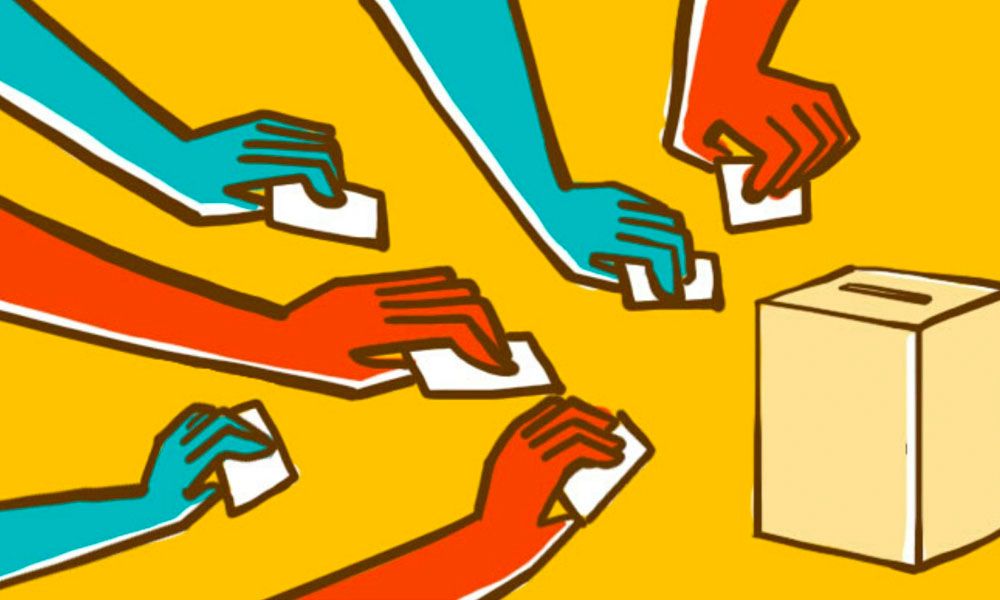
I was privileged to be selected as one of the participants of the 3rd National Youth Symposium 2025, hosted by the Netherlands Institute for Multiparty Democracy (NIMD). The gathering could not have come at a more revealing time for Uganda’s political journey. Under the theme “Reflection on 20 Years of Multiparty Politics: The Role of Young People in Building a Democratic, United, and Prosperous Uganda,” the symposium brought together young voices across political, social, and regional lines to reflect on how far we’ve come, and who gets to shape where we go next. As the country prepares for the 2026 general elections, this political season offers more than campaign posters and nomination rallies. It offers an opportunity to pause and ask: What does genuine participation look like when so many young people still feel unheard? What happens when voter registers raise credibility concerns, or when civic education rarely reaches the grassroots in meaningful ways? At Femme Forte, we also ask what these gaps mean for whose voices are left out; especially young women and girls, who continue to face layered barriers even in spaces meant to include them. The Price of Competing, and the Cost of Exclusion Securing a political party’s flag has always come with hidden costs, but this year, the stakes have become clearer than ever. For many young Ugandans who dream of contesting in 2026, the rising nomination fees have turned a party flag into an expensive hurdle rather than a gateway. According to (The Daily Monitor, 2025), a presidential ticket under the ruling NRM now costs 20 million UGX, while an MP slot costs 3 million, and even a local councilor position can demand up to 1 million. While the NRM defends these fees as a way to “screen serious candidates,” the reality is that the price of entry often screens out those with the most at stake: young people, who make up the largest share of Uganda’s population but hold the smallest share of its wealth. In stark contrast, the Forum for Democratic Change (FDC) charges 5 million for president, 100,000 for MPs, and nothing for councilors. Meanwhile, the National Unity Platform (NUP) currently asks for no nomination fees at any level, positioning itself as more accessible to young and less resourced aspirants.
Uganda’s approach to sexuality education is trapped in silence; a silence fueled by cultural taboos, conservative backlash, and the persistent myth that knowledge equals moral decay. But the cost is devastatingly clear: each year, thousands of girls endure teenage pregnancy, unsafe abortion, sexual violence, and preventable school dropouts: all deeply gendered harms. Keeping girls uninformed is not culture. It is control. Patriarchal systems thrive on girls’ subjugation. Religious gatekeepers conflate morality with ignorance. Politicians barter girls’ futures for votes. A truly feminist approach must name this for what it is: a deliberate barrier to girls’ power over their own bodies and futures. The State of Sexual and Reproductive Health in Uganda: A Crisis Engineered by Silence The statistics are not accidents. They are the direct result of systemic neglect. 25% of Ugandan girls aged 15–19 are already mothers or pregnant (UNFPA, 2024). When COVID-19 hit, school closures and lockdowns pushed a thousand more girls out of classrooms and into risk (Forum for African Women Educationalists Uganda Chapter, 2021). Between March and June 2020 alone, pregnancies among girls aged 10–24 seeking first antenatal care rose by 22.5% from 80,655 to 98,810 cases. The youngest girls paid the heaviest price: pregnancies among girls aged 10–14 skyrocketed by a staggering 366.5%, from 290 in March to 1,353 by September 2020 compared to an increase of 25.5% among girls aged 15–19 and 21.1% among young women aged 20–24. Although the incidence of early marriage was lower, 2.8% of girls and young women surveyed, reported being pressured, sometimes by their own parents to get married during the lockdown. Child sexual abuse is also pervasive. According to Male, Faiaz, Rao, and Raj (2023) 59% of women reported sexual abuse in childhood, and national data showed that 1 in 3 girls under 15 were forced at first sex. The silence around consent and bodily autonomy leaves girls defenseless against such violence. This is not merely a “cultural issue.” It is a political choice. This neglect disproportionately harms rural girls, girls with disabilities, and those living in poverty, deepening their marginalization and denying them access to even the most basic information about their bodies and rights. While a National Sexuality Education Framework exists in principle, it remains limited, inconsistently implemented, and culturally contentious. It fails to meet the realities of adolescents across Uganda. Who Blocks Progress? Naming the Gatekeepers Conservative leaders weaponize culture to suppress girls’ autonomy while ignoring the abuse that silence enables. Underfunded systems leave teachers untrained or too fearful to address sexuality beyond basic biology, perpetuating dangerous myths like menstruation being unclean. Corporate exploiters profit from unsafe abortions and watered-down health programs that depoliticize girls’ rights and silence feminist resistance. A Feminist Way Forward: Truth as Resistance We reject the lie that knowledge corrupts. Comprehensive sexuality education does not corrupt culture; it disrupts the systems that profit from girls’ ignorance and silence. At Femme Forte, we demand: A rewritten National Framework that boldly names power and rights. Teach contraception, consent, and bodily autonomy, without apology and without compromise. Policies shaped with girls, not for them. Girls must lead these conversations, set the agenda, and hold leaders to account. Funding that bites. Redirect budgets from vague awareness campaigns to grassroots feminist educators who break stigma every day and meet girls where they are. To parents: Fear will not protect your daughters, but knowledge will. To leaders: Stop hiding behind tradition. Your inaction fuels rape, poverty, and preventable deaths. To girls: Your body is yours. Own it. Defend it. Define your future. The Revolution Will Not Be Whispered Uganda’s girls are not victims waiting to be rescued they are fighters, denied tools by those who fear their power. We owe them more than pity: we owe them the mic, the curriculum, and the future that is rightfully theirs. Silence is not safety. Shame is not protection. Knowledge is power and we will not settle for less. References Forum for African Women Educationalists Uganda Chapter. (2021). Research Findings on the Situation of, and Impact of Covid-19 on School Going Girls and Young Women in Uganda. Male, S. S., Faiaz, M. M., Rao, N., & Raj, A. (2023, January 22). Home: Publications. Retrieved from AfroBarometer: https://www.afrobarometer.org/publication/ad593-majority-of-ugandans-see-domestic-violence-as-a-private-not-criminal-matter/ Ministry of Education and Sports. (2018). National Sexuality Education Framework. UNFPA. (2024, April 19). Home: Latest News. Retrieved from UNFPA: https://uganda.unfpa.org/en/news/young-innovators-create-solutions-ending-teenage-pregnancy Article by Jacqueline Nampijja
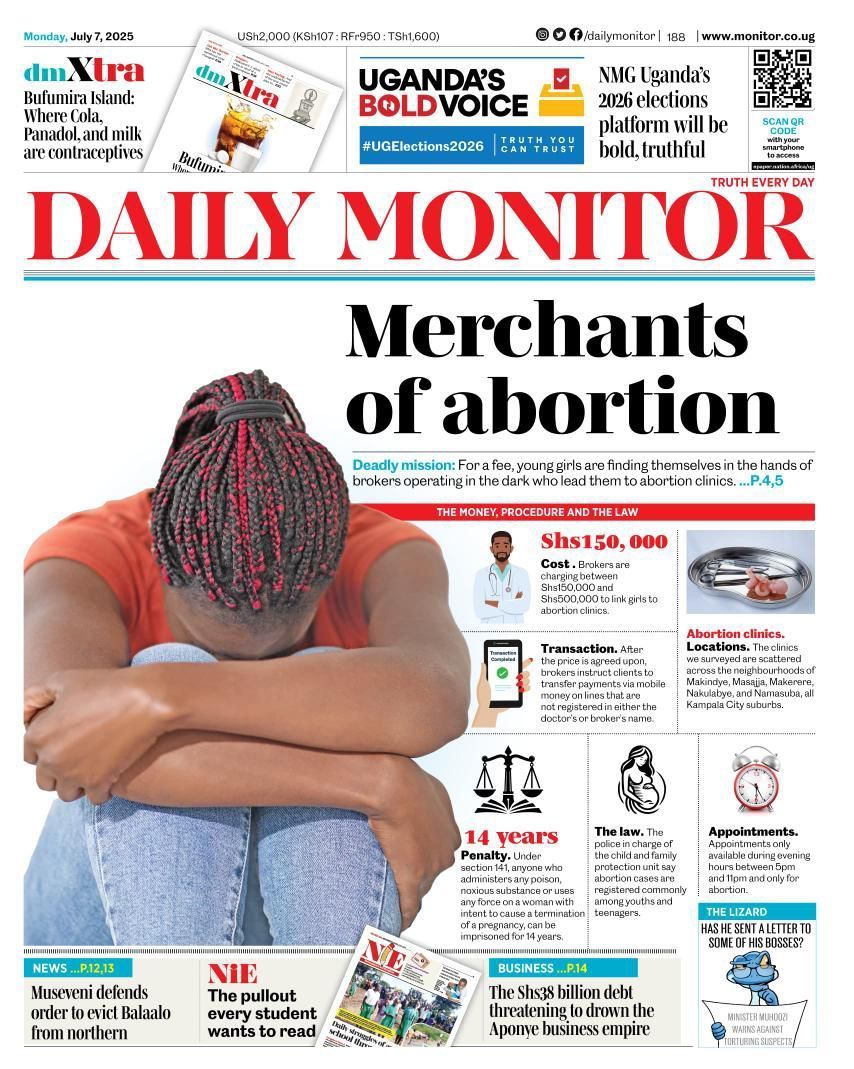
Summary of the Editorial Stance The editorial strongly criticizes so‑called “abortion merchants,” calling for strict enforcement of Uganda’s abortion laws. It frames abortion as criminal and morally reprehensible, pressing police to “crack the whip” on providers. It makes little allowance for nuance, even in cases vulnerable to unsafe abortion, such as rape, extreme poverty, or health risks. Femme Forte champions bodily autonomy, reproductive justice, and movement‑building rooted in African feminist leadership. Our key principles include: Centering women's lived experiences: women and girls must be recognized as autonomous agents, not simply passive subjects. Addressing structural inequality: legal restrictions intersect with poverty, limited access to contraception, gender-based violence, and stigma. Upholding dignity and safe care: we insist unsafe abortion deaths are preventable consequences of legal and social neglect . Critical response to the editorial Ignoring nuance and real harm By lumping all abortion providers as “merchants,” the editorial erases the difference between profiteers and compassionate health workers operating in a restrictive, ambiguous legal environment. This ambiguity fuels unsafe abortions, estimated to cause 8–15% of maternal deaths. Criminalization deepens inequity When services are criminalized, only those with means can access clandestine care from health workers. Poor and rural women are left to resort to unsafe methods often self‑induced or via untrained healers, leading to serious complications. Stigma undermines health The editorial’s tone amplifies stigma. Even post‑abortion care, allowed under law, is compromised by moral condemnation. Health workers face ostracism or legal threat when providing such care.
Recent Posts
Dear Femme Forte, Look at you! A whole nine-year-old today! A whole 108 months, 3,287 days and approximately 78,888 hours of dreaming, building, learning, resisting, surviving, failing, getting back up, celebrating, giving and occasionally operating on prayer, passion and budgets that required the multiplication powers of Jesus. Every year since you were born, I have written you a letter and each year, I am amazed by how much life you have lived since the last one. You have grown, stretched, stumbled, surprised me and even tested me. My goodness, you have tested me! There have been moments when I have looked at you with immense pride, and others when I have whispered, “Madam, please behave.” Yet through it all, you have remained beautifully and stubbornly alive. You were born from an audacious belief, that women and girls deserve to be seen, heard, supported and reminded of their power. What began as an idea in my heart has become an archive of memory, a sisterhood and a movement that now walks on legs beyond my own.
For many women and girls, the internet is a place of promise and contradiction. It offers avenues for visibility and power, yet still echoes the same inequalities and harms they navigate offline. It is a site of resistance, and of repetition. As we mark the 16 Days of Activism against gender-based violence, the question, "What would a truly feminist internet look like?" becomes increasingly urgent. The Challenge: Digital Inequality and Online Violence Instead of expanding opportunity, the digital sphere has become another site where women are routinely targeted; through harassment, stalking, data exploitation, and the non-consensual sharing of intimate images (UN Women, 2020). This violence isn't merely "virtual". It has profound, lasting consequences on confidence, employment, and wellbeing, highlighting that gender-based violence in digital spaces is a continuation of systemic inequality, not an isolated issue. The Legal Ground: Digital Rights Are Women’s Rights Too Women and girls have the right to participate online without fear. Digital safety and privacy are not privileges; they are legal rights protected under both national and international law. In Uganda, the Data Protection and Privacy Act (2019) affirms every individual’s right to: privacy of personal information, consent before data collection and sharing, access and correction of their personal data, and protection from unauthorized data disclosure. This means that women have the legal right to control how their images, phone numbers, messages, and biometric information are used and shared online. Non-consensual sharing of personal or intimate data violates dignity and constitutes a breach of the law. Globally, frameworks such as the EU General Data Protection Regulation (GDPR) reinforce similar principles of consent, transparency, and data control (EU, 2016). On the African continent, the African Union Convention on Cybersecurity and Personal Data Protection (Malabo Convention, 2014) emphasizes digital rights and state responsibility to prevent cyber violence and exploitation. A feminist internet, therefore, is rooted not only in social justice, but also in law. Systemic Failure and Lack of Representation Legal protections alone are not enough because technology platforms are designed within patriarchal, profit-driven systems. Algorithms, content moderation tools, and platform policies often embed gender biases, prioritizing engagement and speed over user safety. Features that amplify virality can unintentionally promote harassment, while reporting tools frequently fail to address gendered abuse effectively. Women, particularly those from marginalized communities, are also underrepresented in tech leadership and digital policymaking (APC, 2022). This combination of exclusion and systemic bias means platforms rarely center care, equity, or inclusion. Paired with harassment and surveillance, these gaps turn potential digital empowerment into risk, leaving women and girls vulnerable and reinforcing barriers to participation and freedom online. reinforcing barriers to participation and freedom online. A Way Forward: Building the Feminist Internet We Deserve To build the feminist internet we deserve, we must articulate what we are striving toward, not only what we are resisting. A feminist internet is one where safety isn’t a privilege, where content moderation centres survivors rather than trolls. It is an internet where data belongs to the people who generate it, where access is equitable, and where girls can learn, create, and lead without fear of surveillance, shame, or harm. The fight for a feminist internet is fundamentally the fight for freedom itself. It calls us to reclaim digital spaces that have too long been shaped without us, and often against us. A feminist digital future must be built on openness, safety, and justice, not surveillance, profit, or fear. This requires more than just access; it demands agency. Women and girls must not only log in; they must be given the chance to lead, to design, code, legislate, and imagine technology that protects rather than polices them. By prioritizing the voices of diverse groups in the development of digital policies and frameworks, we can move toward a more just and inclusive digital future. Emphasizing critical digital literacy will empower women to navigate online spaces safely and effectively, enhancing their ability to participate fully in both digital and civic life. Conclusion A feminist internet thus demands intention; from the code we write, to the policies we lobby for, to the care we extend toward one another online. Building a just and fearless digital future will not emerge by default. It begins with the choice to centre safety, consent, and justice in every digital space we design, govern, and inhabit. The time for passive connection is over. The time to build the feminist internet we deserve is now. Article by Esther Awor
Press Release
I was privileged to be selected as one of the participants of the 3rd National Youth Symposium 2025, hosted by the Netherlands Institute for Multiparty Democracy (NIMD). The gathering could not have come at a more revealing time for Uganda’s political journey. Under the theme “Reflection on 20 Years of Multiparty Politics: The Role of Young People in Building a Democratic, United, and Prosperous Uganda,” the symposium brought together young voices across political, social, and regional lines to reflect on how far we’ve come, and who gets to shape where we go next. As the country prepares for the 2026 general elections, this political season offers more than campaign posters and nomination rallies. It offers an opportunity to pause and ask: What does genuine participation look like when so many young people still feel unheard? What happens when voter registers raise credibility concerns, or when civic education rarely reaches the grassroots in meaningful ways? At Femme Forte, we also ask what these gaps mean for whose voices are left out; especially young women and girls, who continue to face layered barriers even in spaces meant to include them. The Price of Competing, and the Cost of Exclusion Securing a political party’s flag has always come with hidden costs, but this year, the stakes have become clearer than ever. For many young Ugandans who dream of contesting in 2026, the rising nomination fees have turned a party flag into an expensive hurdle rather than a gateway. According to (The Daily Monitor, 2025), a presidential ticket under the ruling NRM now costs 20 million UGX, while an MP slot costs 3 million, and even a local councilor position can demand up to 1 million. While the NRM defends these fees as a way to “screen serious candidates,” the reality is that the price of entry often screens out those with the most at stake: young people, who make up the largest share of Uganda’s population but hold the smallest share of its wealth. In stark contrast, the Forum for Democratic Change (FDC) charges 5 million for president, 100,000 for MPs, and nothing for councilors. Meanwhile, the National Unity Platform (NUP) currently asks for no nomination fees at any level, positioning itself as more accessible to young and less resourced aspirants.
